Hammock camping has become a popular alternative to traditional tent camping. It offers a lighter, more flexible, and often more comfortable way to sleep outdoors. Instead of pitching a tent on uneven or rocky ground, campers suspend a hammock between trees and sleep above the forest floor. This simple shift changes the entire outdoor experience. Hammock camping connects you more closely with nature while reducing the weight and bulk of your gear. However, it also requires a different set of skills and knowledge compared to tent camping. Understanding the right Hammock Camping Tips can make the difference between a restful night outdoors and a difficult, uncomfortable experience.
Why Hammock Camping Is Becoming a Popular Outdoor Choice
Hammock camping appeals to hikers, backpackers, and outdoor enthusiasts because it is lightweight, versatile, and adaptable to many environments. It allows campers to avoid uneven terrain, rocks, and wet ground while offering a suspended sleeping position that many find more comfortable.
How hammock camping compares to tent camping
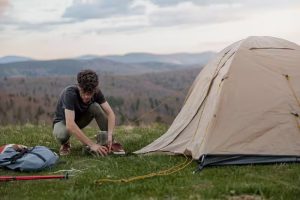
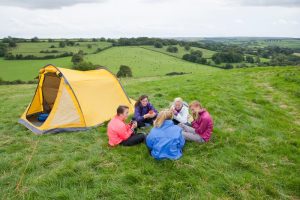
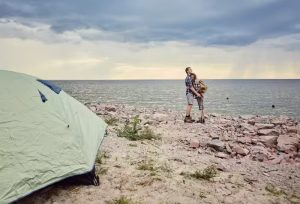
Tent camping requires flat ground, which is not always available in forested or mountainous areas. Hammock camping removes this limitation by using trees as anchor points. Hammocks are generally lighter than tents, making them ideal for backpackers who prioritize reducing pack weight. They also offer better ventilation in warm weather since air flows freely around the sleeper. However, tents provide more protection in extreme cold or open environments where trees are not available.
Situations where hammocks perform best in the wild
Hammocks perform best in wooded areas with strong, healthy trees spaced appropriately apart. They are ideal for summer camping, humid climates, and backcountry trails where terrain is uneven. They are less suitable in alpine zones, deserts, or open fields where anchor points are limited.
Essential Gear You Need for Successful Hammock Camping
Having the right equipment is essential for comfort and safety. A hammock alone is not enough for a successful outdoor experience.
Choosing the right hammock for comfort and durability
Not all hammocks are designed for camping. Outdoor hammocks should be made of durable, rip-resistant materials such as nylon or polyester. A good camping hammock should support your weight comfortably and offer enough length to allow a slight diagonal sleeping position. This position helps reduce pressure on your back and improves comfort during sleep.
Suspension systems, straps, and carabiners explained
Suspension systems connect your hammock to trees. Tree straps are preferred because they reduce damage to bark and provide stability. Adjustable straps and strong carabiners allow you to control height and tension. Avoid tying ropes directly around trees, as this can damage both the tree and your setup stability.
Must-have accessories for weather protection
A rain tarp is essential for protection against rain and wind. Underquilts and top quilts help regulate temperature in colder conditions. Bug nets are also important in insect-heavy environments. These accessories transform a simple hammock into a complete outdoor sleeping system.
Understanding the Ideal Campsite for Hammock Setup
Choosing the right campsite is one of the most important Hammock Camping Tips. The environment determines comfort, safety, and sleep quality.
Look for two healthy trees spaced at an appropriate distance, usually between 10 to 15 feet apart. The trees should be strong enough to support your weight and free from dead branches that could fall. Avoid low-lying areas where water may collect during rain. Wind exposure should also be considered, as strong winds can affect stability and warmth.
Hammock Camping Tips for Proper Setup and Safety
Proper setup ensures both comfort and safety during your trip.
Finding the right trees and anchor points
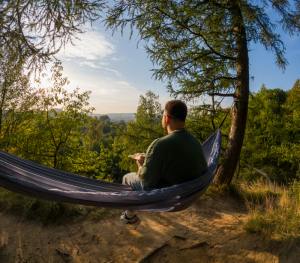
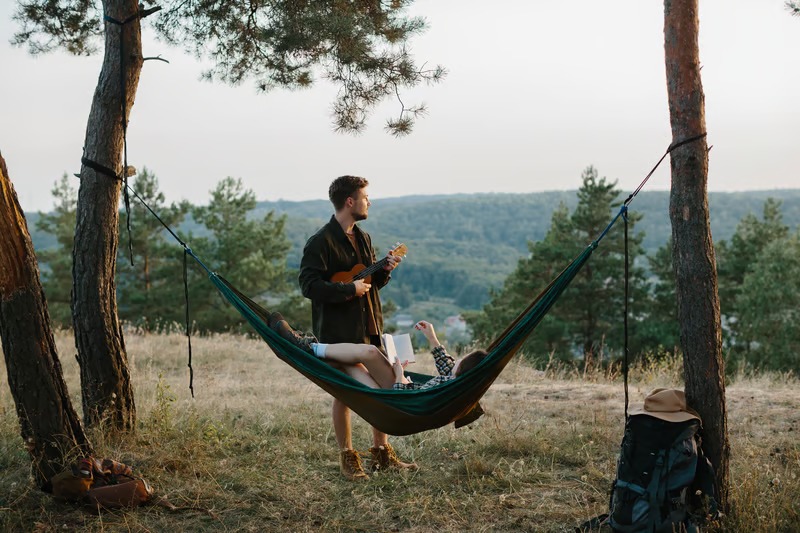
Select trees that are at least six inches in diameter and appear healthy. Avoid dead or unstable trees. Anchor points should be at a comfortable height, typically around shoulder level or slightly higher. This allows the hammock to form a gentle curve without touching the ground.
Correct height, angle, and tension for sleeping comfort
The ideal hammock angle is around 30 degrees. This angle reduces pressure on your body and allows for a flatter sleeping position. The hammock should hang low enough for easy entry but high enough to avoid ground contact when occupied. Proper tension prevents excessive sagging or instability.
Avoiding common setup mistakes beginners make
Many beginners hang their hammocks too tightly, which creates a curved and uncomfortable sleeping position. Others ignore tree spacing or choose weak anchor points. Overlooking these details can lead to poor sleep or unsafe conditions.
Weather Protection Strategies for Hammock Campers
Weather conditions can change quickly outdoors, so preparation is essential.
Using rain tarps effectively in unpredictable conditions
A properly positioned rain tarp protects against rain, wind, and dew. It should be angled to allow water runoff and secured tightly to prevent flapping in the wind. Larger tarps provide better coverage but require more setup time.
Staying warm in cold weather with insulation layers
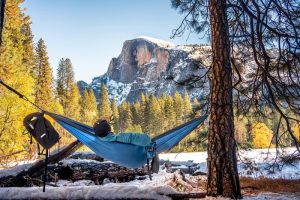
Hammocks lose heat from all sides, especially underneath. Underquilts are essential in cold conditions because they trap body heat below the hammock. Top quilts provide insulation from above. Layering insulation correctly ensures warmth even in freezing temperatures.
Managing heat and airflow in summer camping
In warm weather, airflow is your biggest advantage. Light fabrics, open tarp configurations, and breathable clothing help prevent overheating. Choosing shaded areas also improves comfort during hot nights.
Sleeping Comfort: How to Improve Rest in a Hammock
Comfort is one of the biggest reasons people switch to hammock camping, but proper technique matters.
Choosing sleeping positions for better spinal alignment
Sleeping slightly diagonally across the hammock creates a flatter surface, reducing pressure on your back. This position helps maintain spinal alignment and prevents the “banana shape” that can cause discomfort.
Using underquilts, top quilts, and sleeping pads
Underquilts attach beneath the hammock and provide insulation from cold air. Top quilts replace traditional sleeping bags and offer easier movement. Sleeping pads can also be used for extra insulation and structure. Combining these tools improves overall sleep quality significantly.
Common Hammock Camping Mistakes and How to Avoid Them
Many beginners face challenges that can easily be avoided with preparation.
Overlooking insulation and nighttime temperature drops
Even in warm climates, nighttime temperatures can drop significantly. Without proper insulation, you may feel cold from underneath. Always prepare for cooler conditions than expected.
Improper knotting and suspension setup errors
Incorrect knots or poorly secured straps can cause instability. Always double-check your suspension system before use. Using reliable hardware reduces risk.
Ignoring weight limits and gear compatibility
Every hammock has a weight limit. Exceeding it can damage gear and create safety risks. Always check compatibility between your hammock, straps, and accessories.
Safety Considerations Every Hammock Camper Should Know
Safety is essential in any outdoor activity.
Tree safety and environmental responsibility
Only use healthy trees for suspension. Avoid damaging bark by using wide tree straps. Leave no trace principles should always be followed to protect natural environments.
Wildlife awareness and campsite precautions
Be aware of local wildlife and avoid leaving food near your sleeping area. Choose campsites that reduce exposure to insects and animals. Good awareness improves both safety and comfort.
Hammock Camping in Different Terrains and Environments
Hammock camping can adapt to various environments with the right adjustments.
Forest camping setups and natural shelters
Forests are ideal for hammock camping due to abundant trees. Natural cover also helps with wind and rain protection.
Beach, mountain, and backyard hammock adaptations
On beaches or open areas, finding suitable anchor points may be challenging. Portable stands or alternative setups may be required. In mountainous regions, weather protection becomes more important than setup flexibility.
Packing Smart: Lightweight Strategies for Backpackers
Efficient packing improves mobility and reduces fatigue.
Prioritizing essential gear over non-essentials
Focus on lightweight, multi-purpose gear. Avoid carrying unnecessary items that increase pack weight.
Compact storage techniques for easy mobility
Roll and compress gear tightly to save space. Store frequently used items in accessible compartments for convenience during setup.
Advanced Hammock Camping Tips for Experienced Campers
Once you master the basics, you can explore more advanced strategies.
Multi-night hammock camping strategies
For longer trips, plan for changing weather conditions and rotate sleeping positions to maintain comfort. Regular gear checks help prevent wear and tear.
Modular setups for changing weather conditions
Advanced campers often use modular systems that allow quick adjustments. This includes interchangeable tarps, insulation layers, and suspension setups for different environments.
Why Hammock Camping Tips Improve Outdoor Experience and Comfort
Learning effective Hammock Camping Tips transforms the outdoor experience. Proper setup, gear selection, and environmental awareness all contribute to safety and comfort. Hammock camping is not just about sleeping outdoors; it is about adapting to nature in a smarter and more efficient way. With the right knowledge, campers can enjoy lightweight travel, improved sleep quality, and greater flexibility in choosing campsites. As skills develop, hammock camping becomes not only practical but also deeply rewarding, offering a unique connection to the natural world while maintaining comfort and safety.
Conclusion
Hammock camping offers a practical and enjoyable way to experience the outdoors when done with the right preparation and knowledge. By applying essential Hammock Camping Tips such as proper setup, gear selection, weather protection, and safety awareness, campers can avoid common mistakes and significantly improve comfort. While it may feel unfamiliar at first compared to traditional tent camping, hammock camping quickly becomes intuitive with practice. The key is to balance simplicity with smart planning, ensuring your setup is both secure and suited to the environment. With the right approach, hammock camping can transform your outdoor adventures into lighter, more flexible, and far more comfortable experiences in nature.